Friday, August 04, 2006

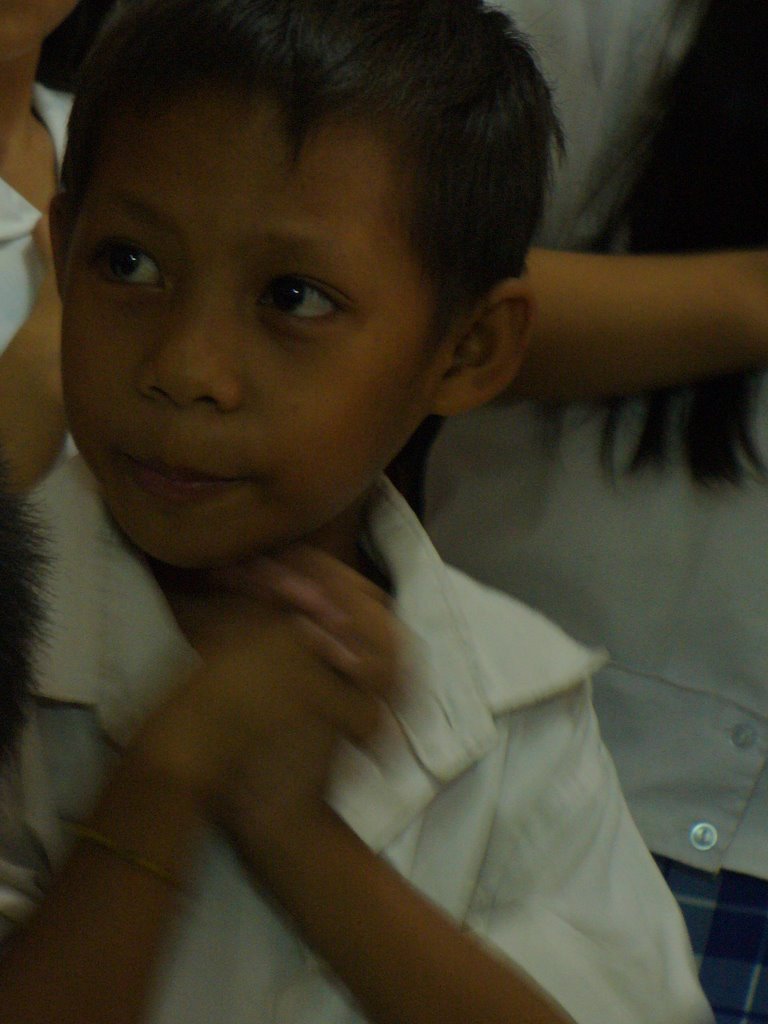
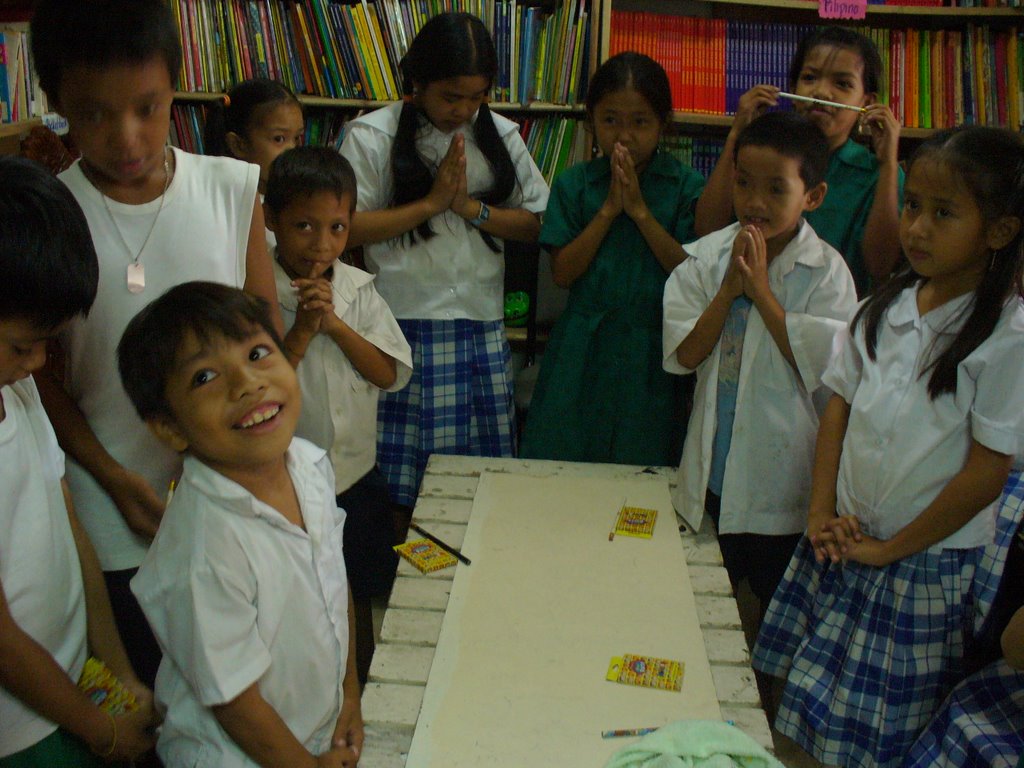
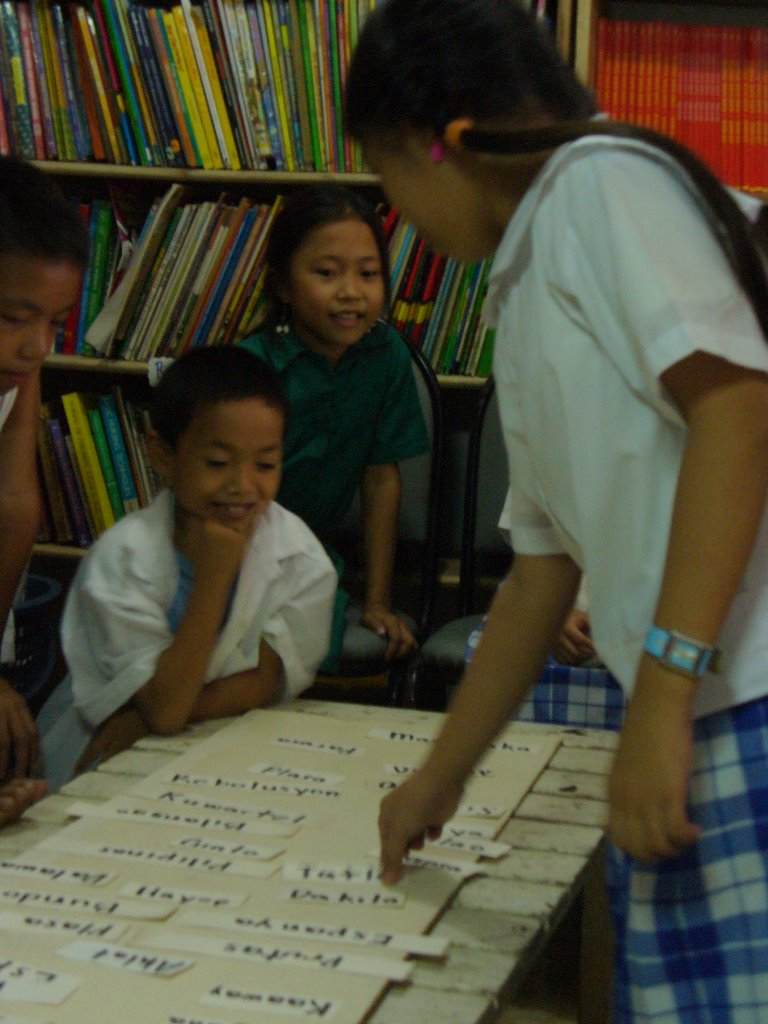
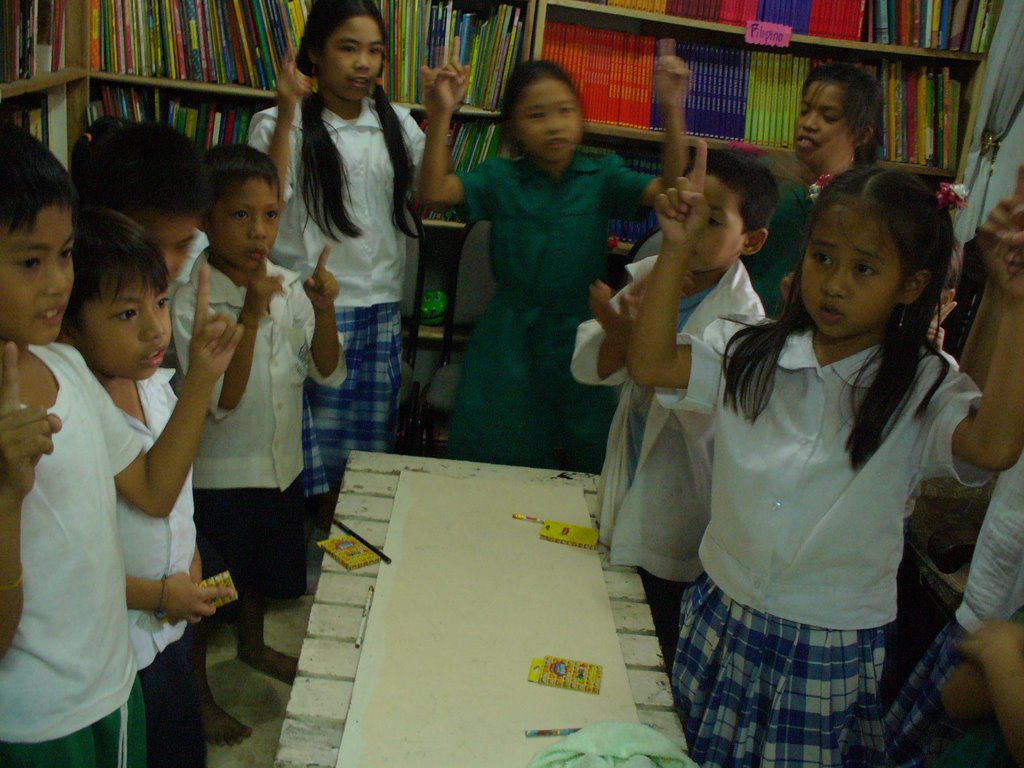
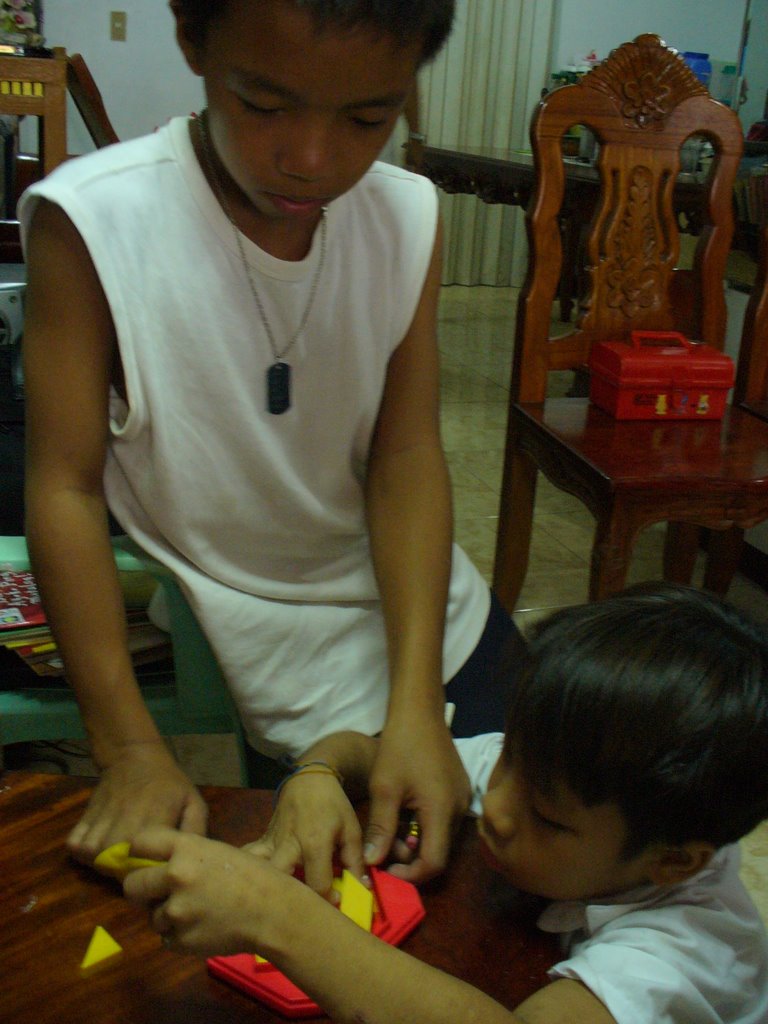
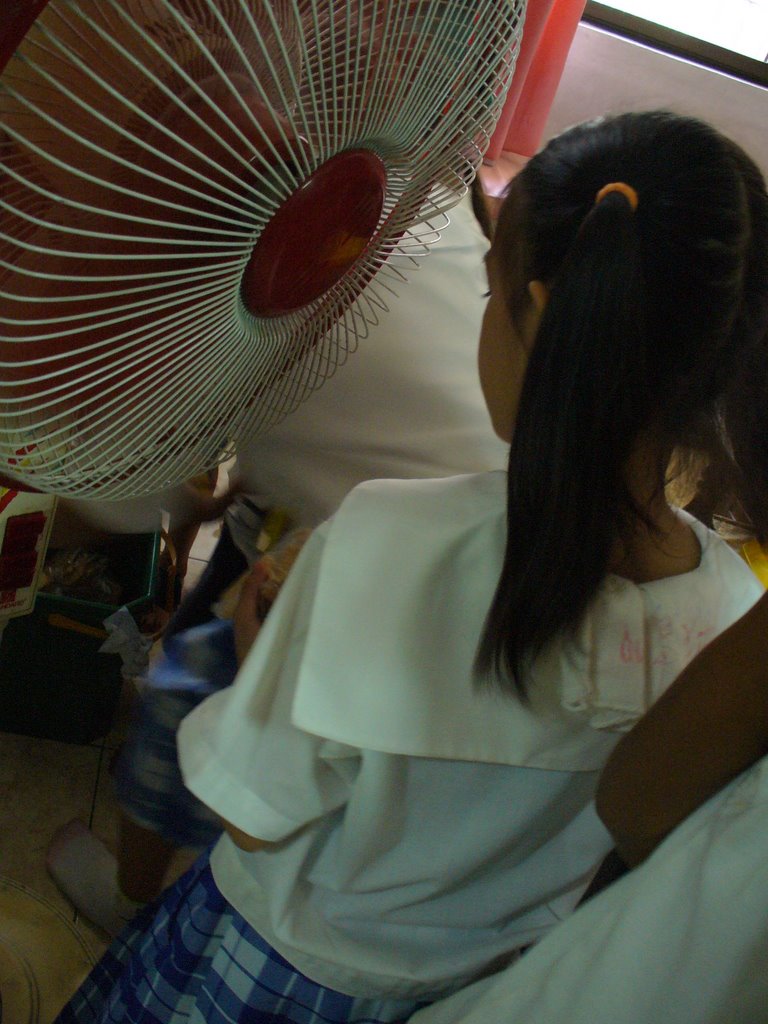
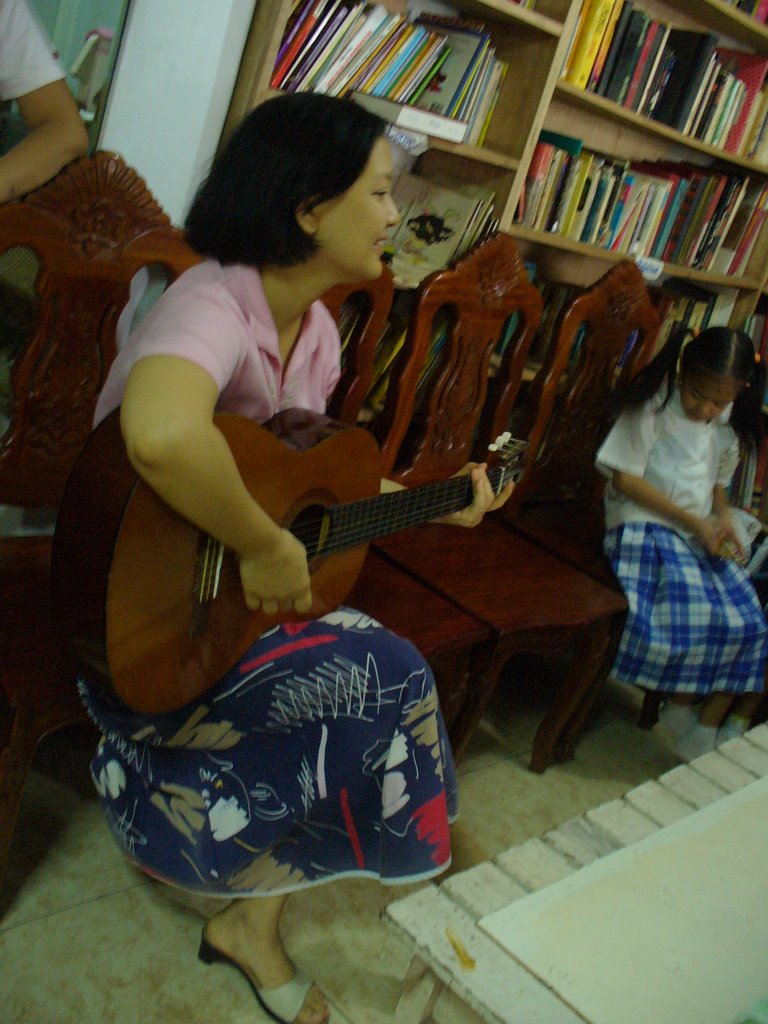
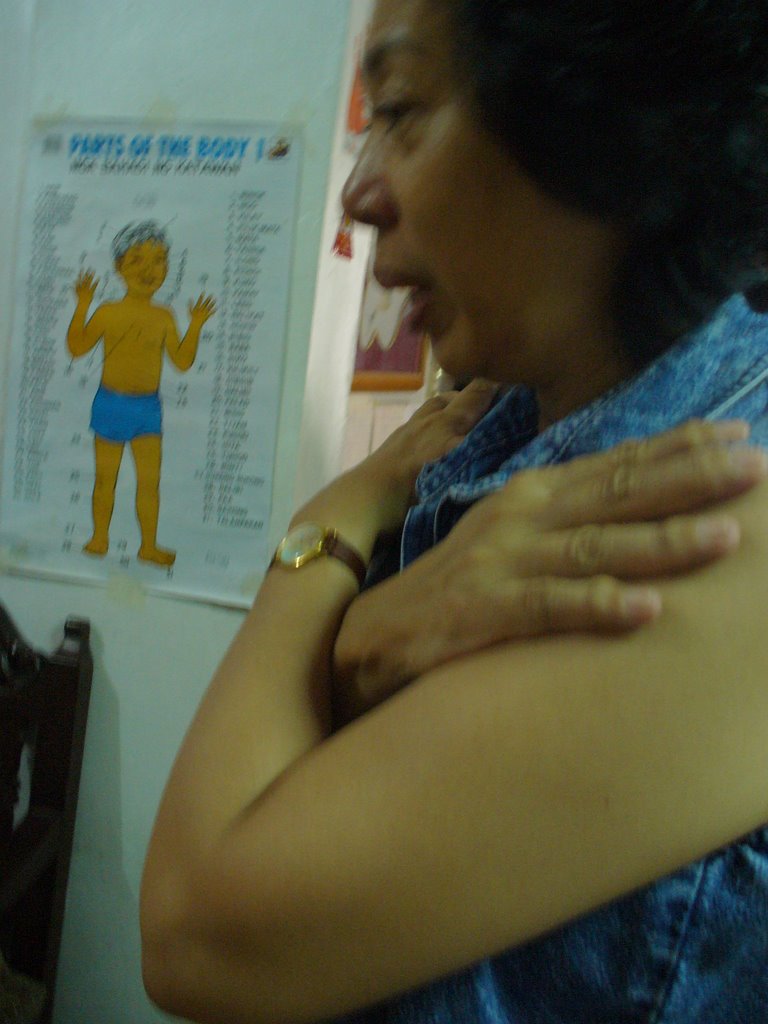
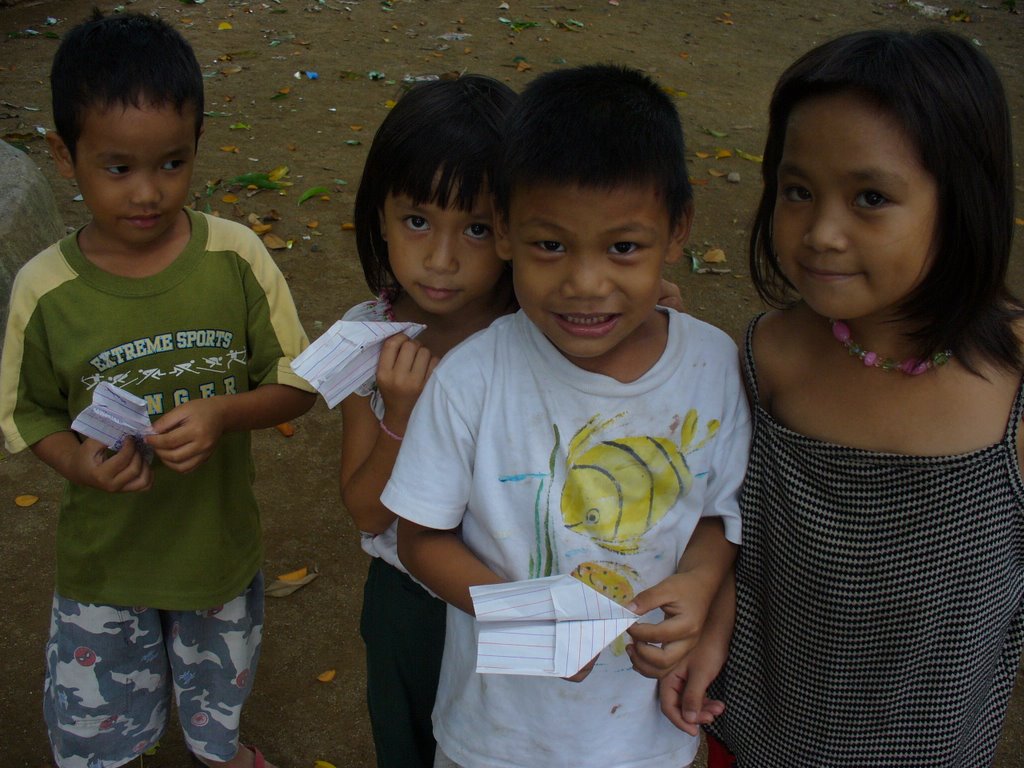
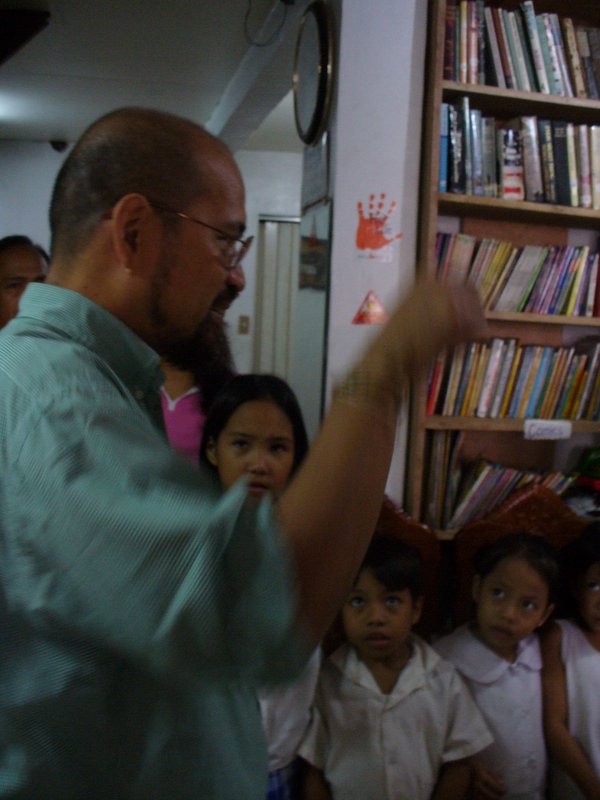
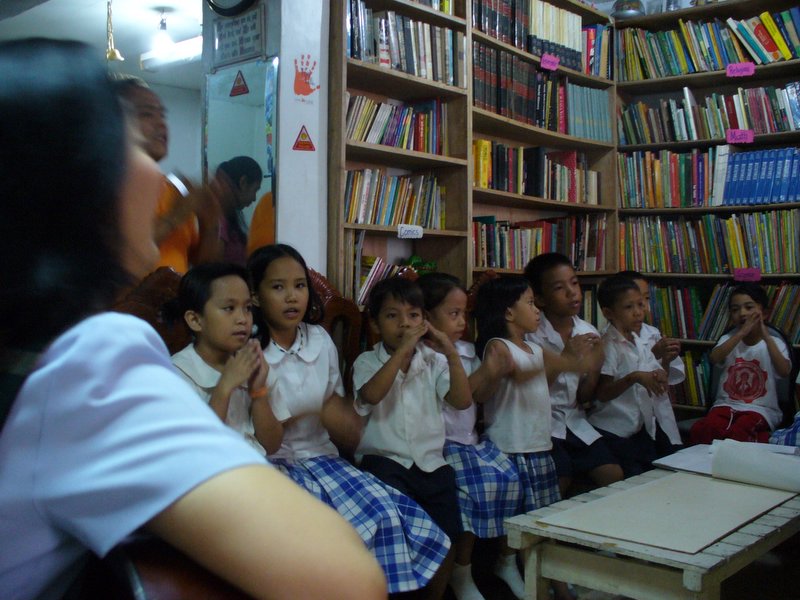
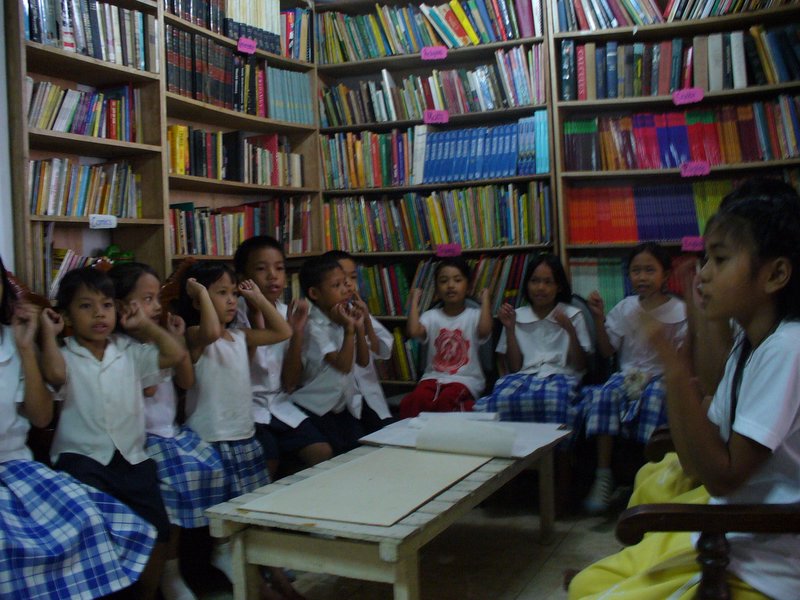
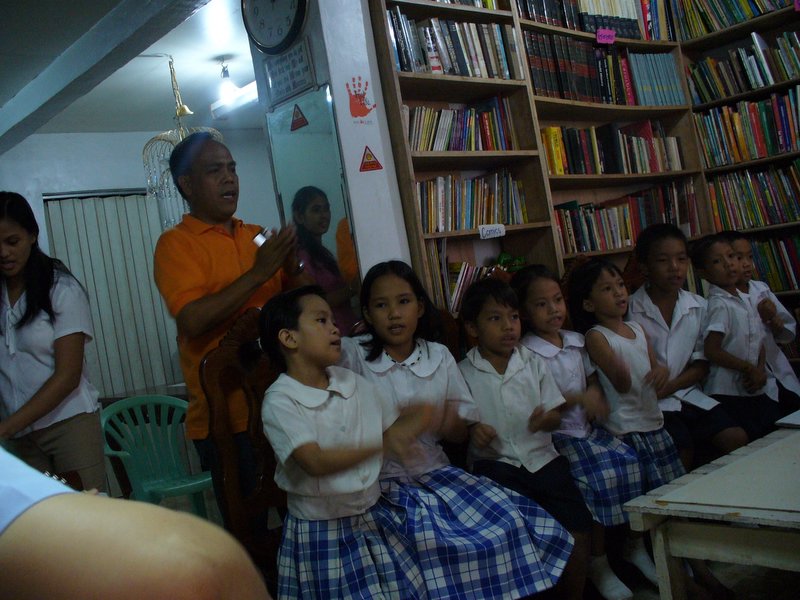
The Karangalan Library kids thank you


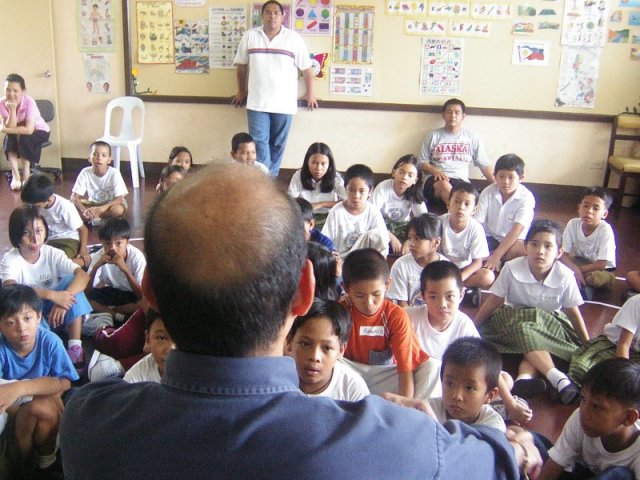
Undo leads the Karangalan Kids in prayer


Mahal na Panginoon,


Salamat sa library


Salamat sa pagkain


Salamat kay Teacher Kam, Teacher Aileen, Teacher Sherwil, Teacher Frannie, Teacher Marifel,


Salamat kay Teacher Rhea,


Salamat sa nagbigay ng papel.


Salamat sa nagbigay ng lapis


Salamat sa nagbigay ng color. Amen.


The children, through their reading and writing work, are trying to earn points not only to exchange for the donations you send but also for a trip to the carnival this December. Come and visit Karangalan Library (Cainta Rizal) to see their progress!


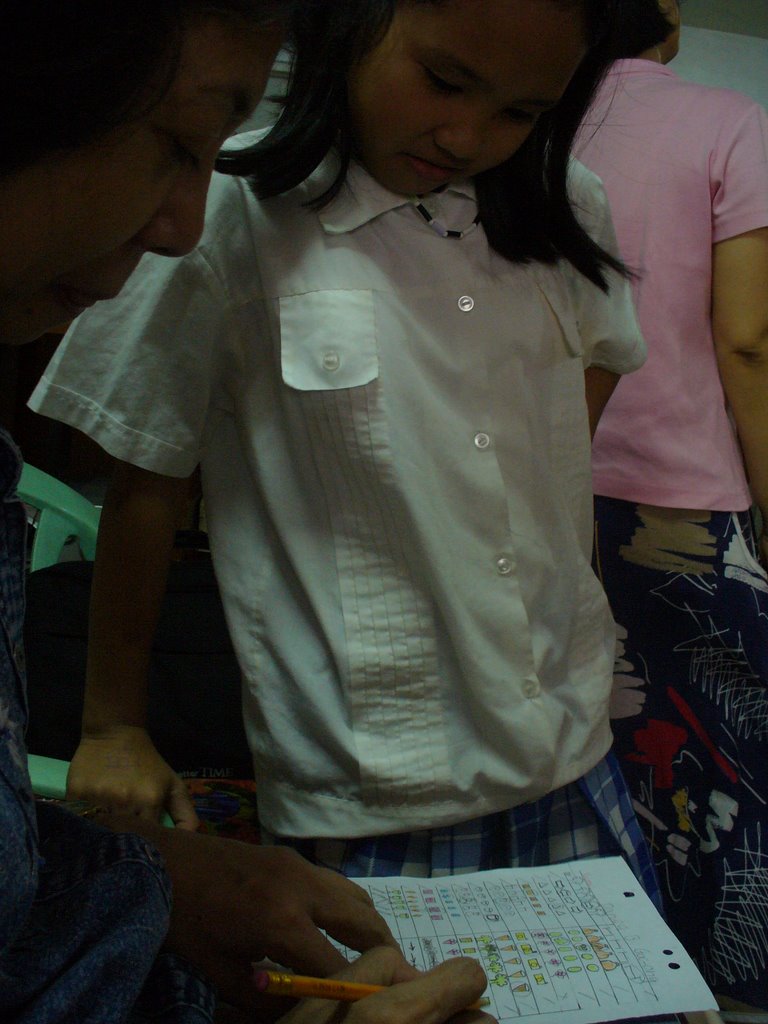
Thank you to Jamie Lyn C. Arcega for the notepads, art paper, crayons, and pencils. The kids are so grateful! For more pictures from this visit, click here.


Share/Bookmark

Wednesday, August 02, 2006

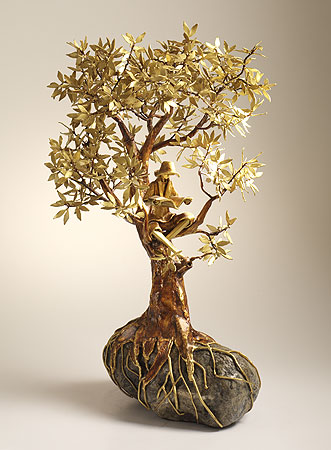
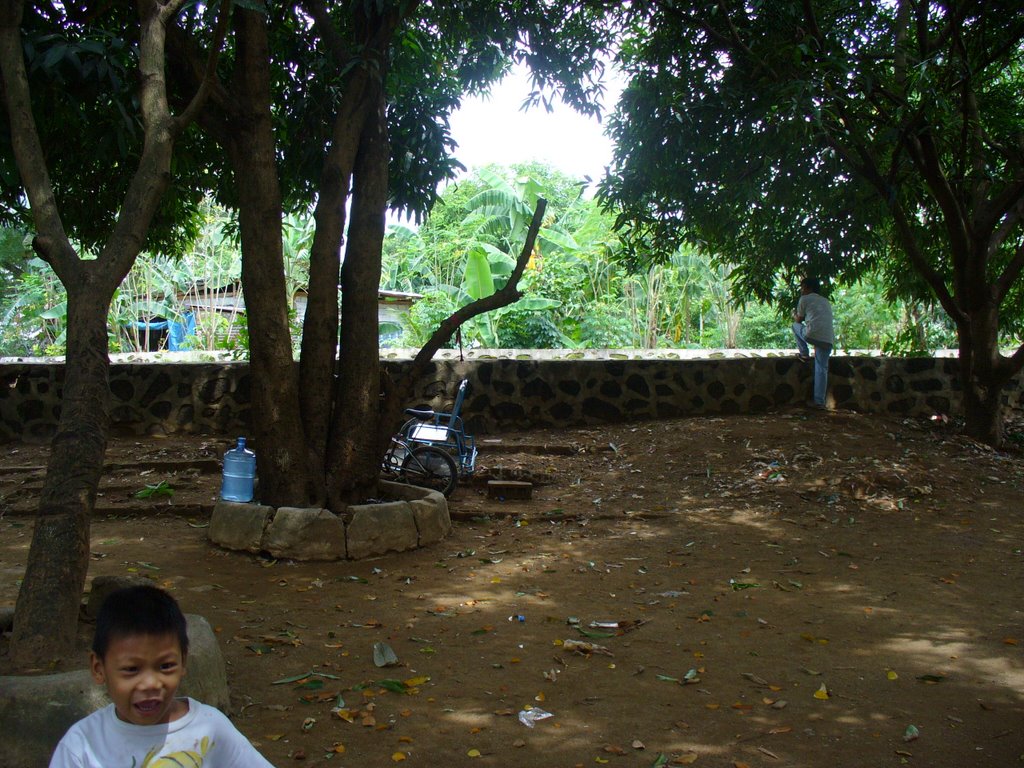
Sanctuary


Sculpture by Michael Cacnio

Sanctuary
by Cynthia Villafranca

Sunlight streams through the leaves.
Shadows lengthen,
but the boy hardly notices.
High up in the tree,
his finger spears the page
trying to capture letters,
words,
sentences.
Only the leaves hear him
as he stumbles,
fumbles,
mumbles the lines.
It is an everyday struggle,
here, in his sanctuary;
struggling to read
high up these guava branches.


Thank you to Gigo Alampay of Canvas for permission to post the photo and poem!
Please visit Michael Cacnio's exhibit in Greenbelt 4.
Share/Bookmark

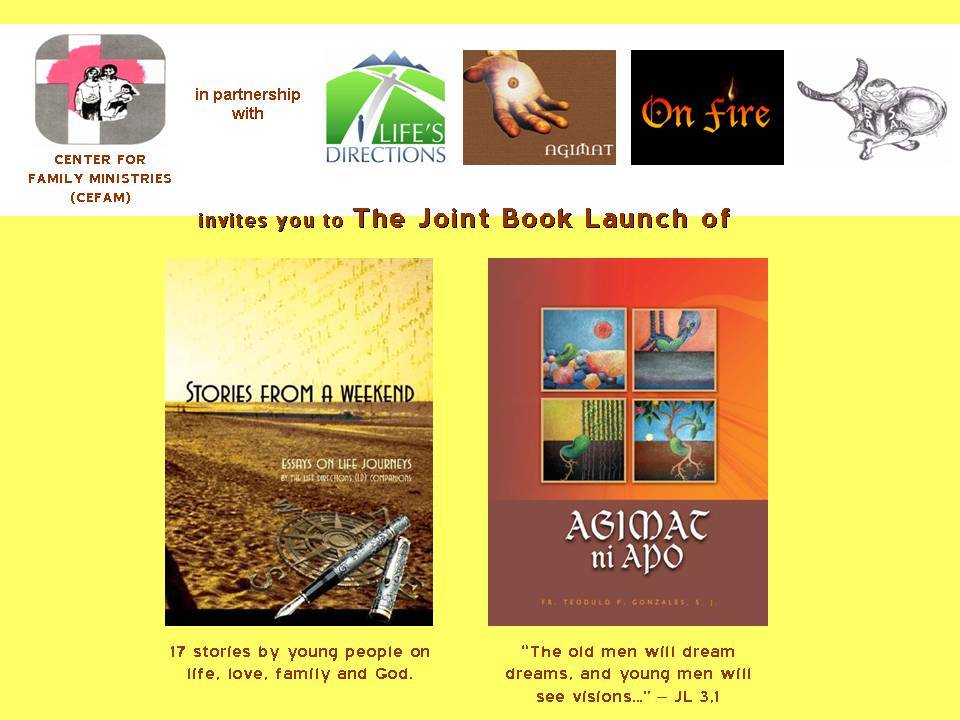
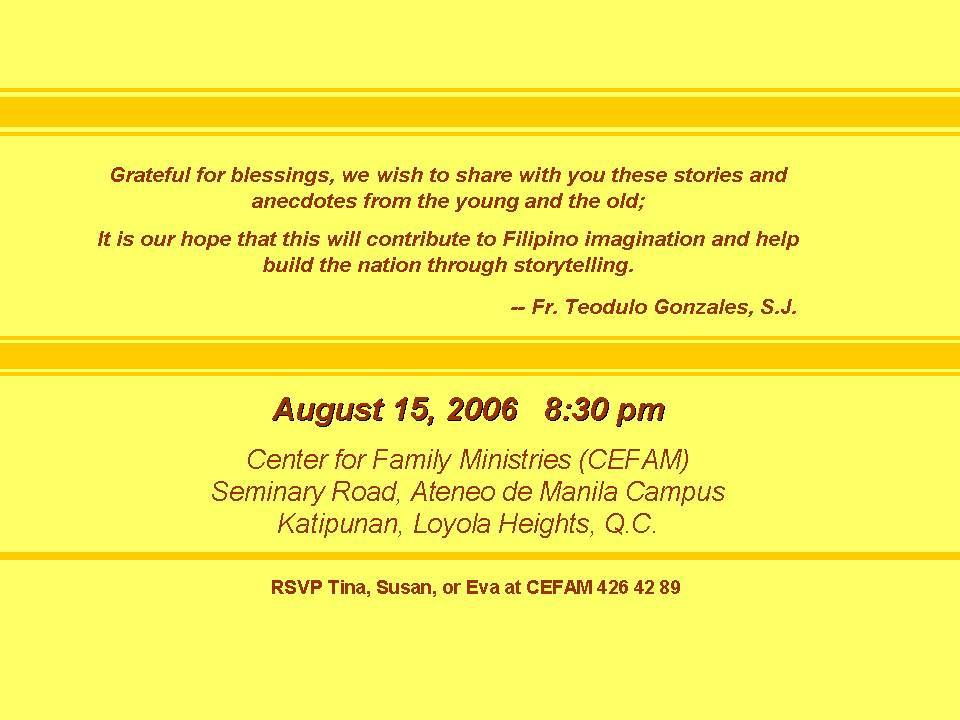
Joint Book Launch, August 15 Tuesday 8:30 pm


Stories from a Weekend is a compilation of stories from Life's Directions, a retreat-based community that's been bringing the youth together on weekends to discern and pray together, for about twelve years now.

Agimat ni Apo is a compilation of stories on leadership and love for the Philippines.

Come and support the project!

Click here for more info.


Share/Bookmark

New look!

Our site has been down the past few days! I’m not sure what the problem is, but just to be on the safe side, we salvaged the old posts (2005- Summer 2006) and transferred them to this link, and all new posts (July 2006-onwards) will be posted here.
Share/Bookmark

A Visit to Karangalan Library (Karangalan Village, Cainta, Rizal)


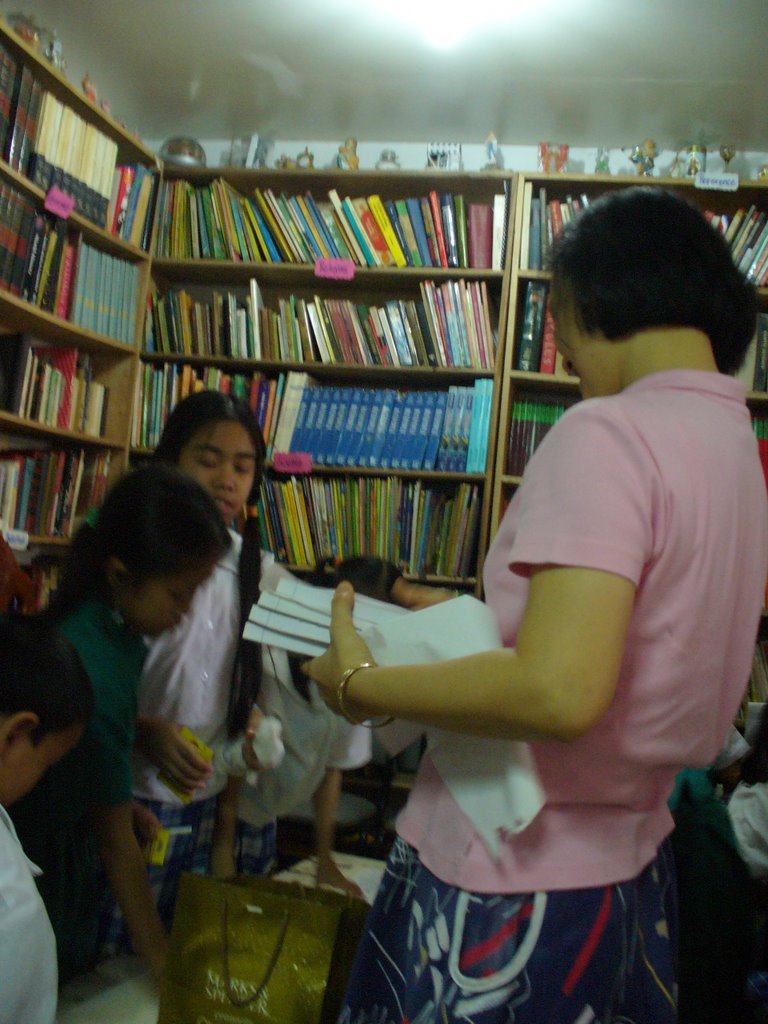
July 27, 2006. Fr. Ted, Marifel and I trooped to Cainta, Rizal to Marcy and Mitos Buenaventura’s home, whose first floor was converted into Karangalan Library, for one of BASA/LCDF’s daily reading sessions (M-F 11:30-1pm) and extra activities on Saturdays. Mitos, the wife of Marcy, is a cancer survivor - her recovery was one of the reasons the couple offered their home to be used by the Row 4 students of Karangalan .


When we arrived, the younger kids were already working on their capital and lower case Y’s (the letter of the day). They took a break from their writing so we could start the reading session.


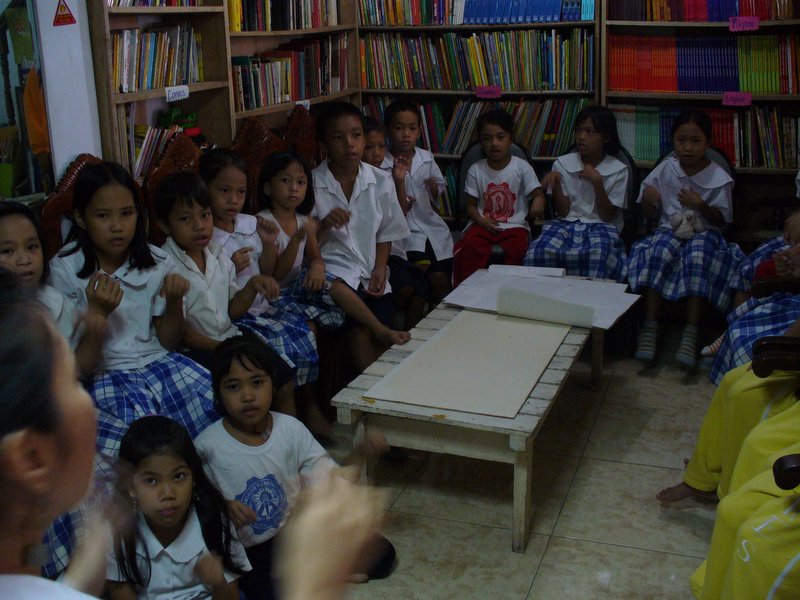
Fr. Ted lead a bodily-kinesthetic prayer.


Marifel asked the kids what songs they wanted to sing.


They suggested “With Christ as my vessel, I can smile at the storm”


Here's Marcy (in orange) with the kids in prayer.


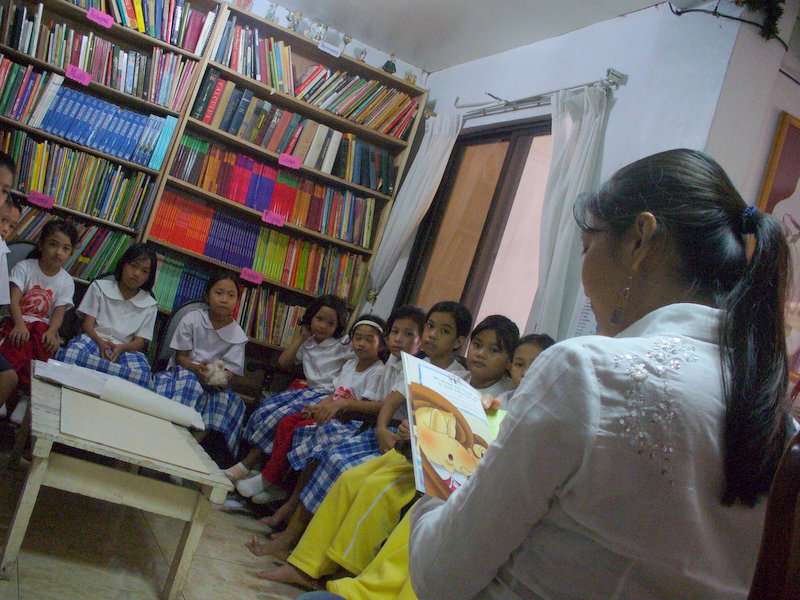
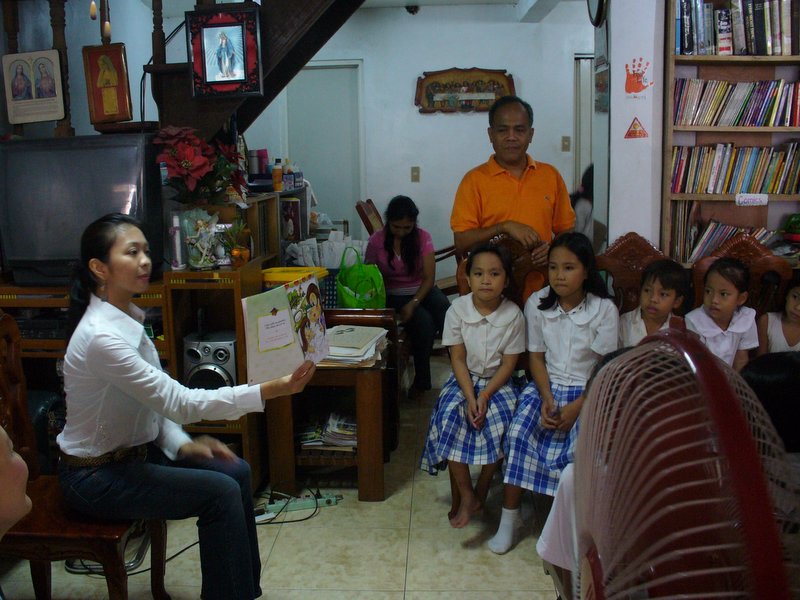
I volunteered to read the Tagalog version of “Grandma and Me” a story about Bea, an only child of an OFW, who lived with her grandma.


In the story, Bea lived apart from her parents, but knew that she was loved. She and her grandma would bond by reading together and singing songs about Jesus. Here we are singinging “Jesus Loves Me”.


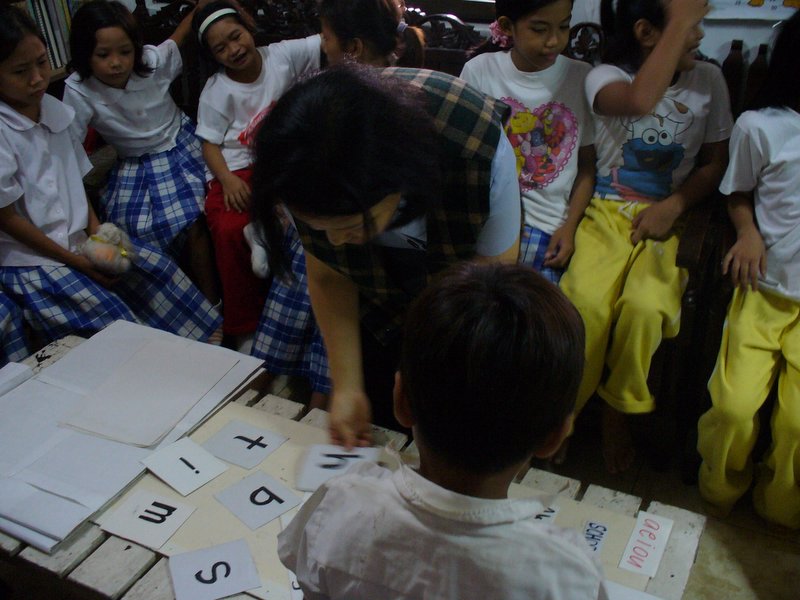
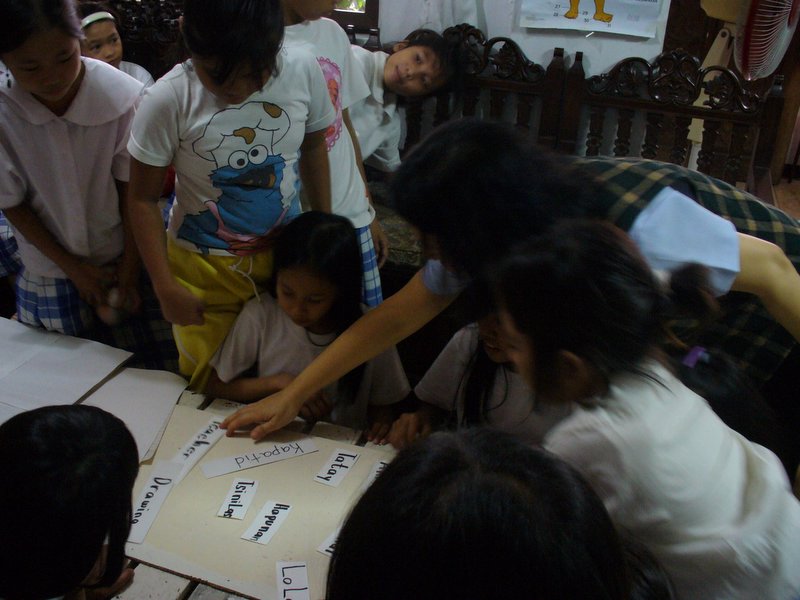
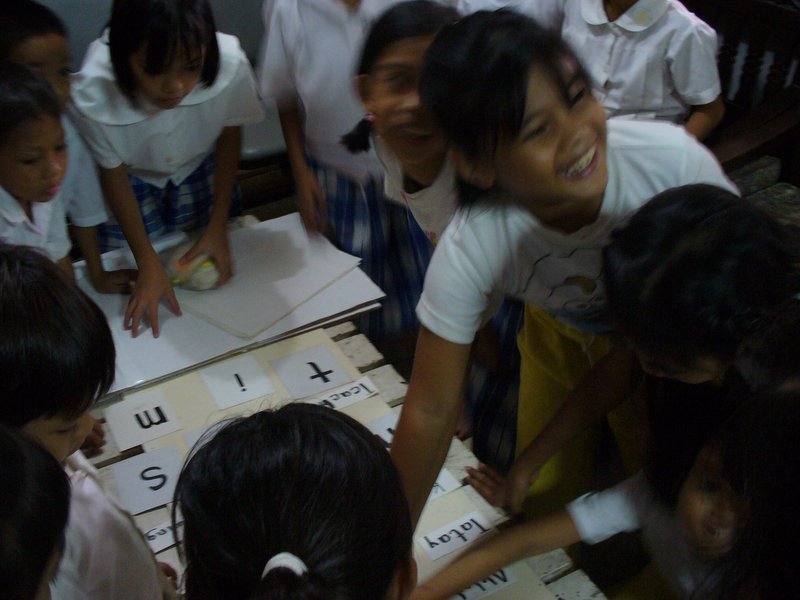
Game time! Words from the story are used in reading games.


There's a game for the younger kids who can recognize initial sounds.


And here's another one for older students who can read whole words.


After the vocabulary games, the kids resumed writing. The older kids went to a separate group for decoding more difficult words -volunteers from LCDF help the children overcome their shyness and encourage them to read more advanced words.

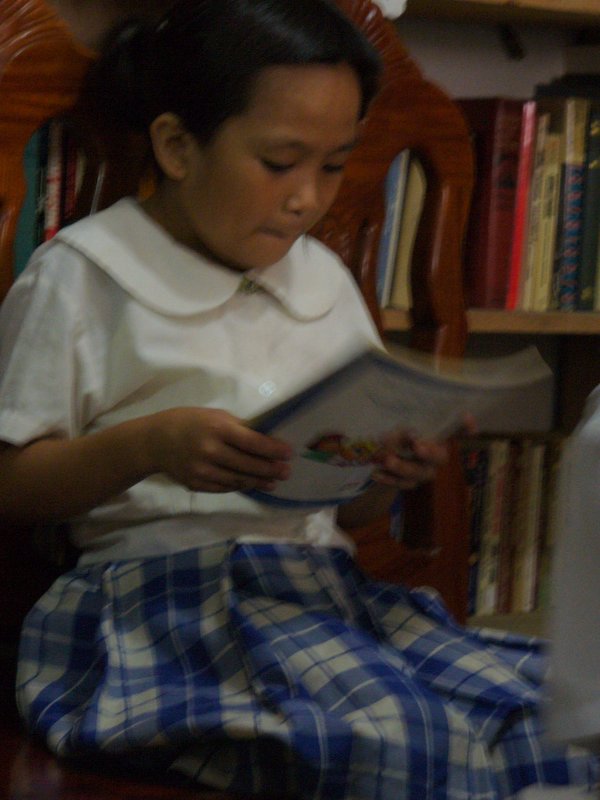
Free choice followed:


Some kids chose books,


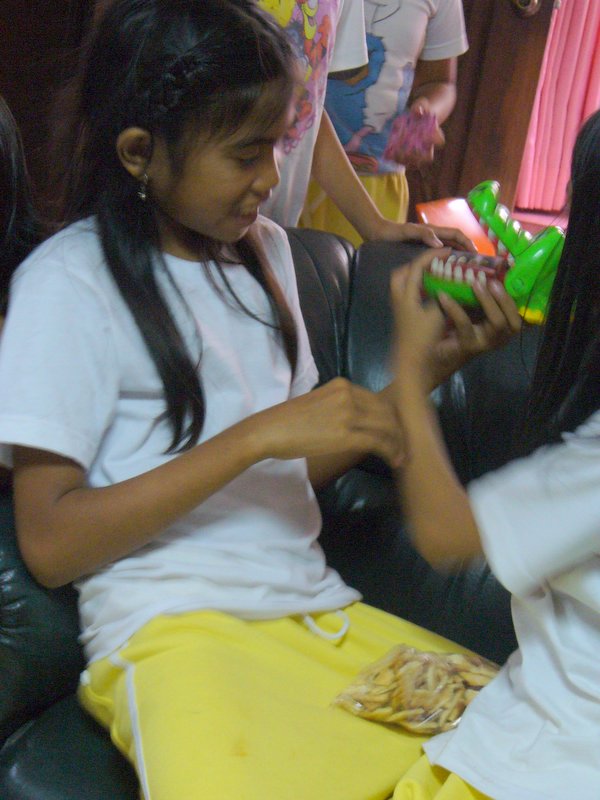
the rest chose other activities.


Fr. Ted liked this one, obviously!


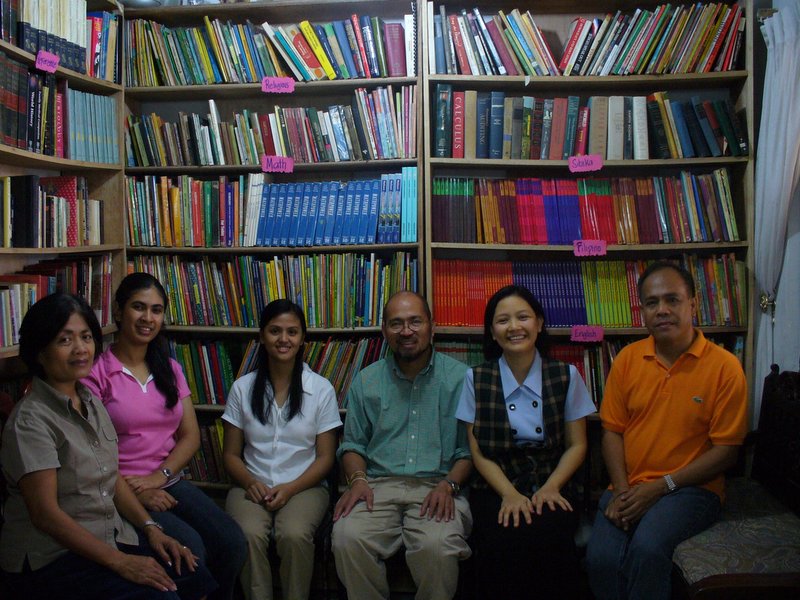
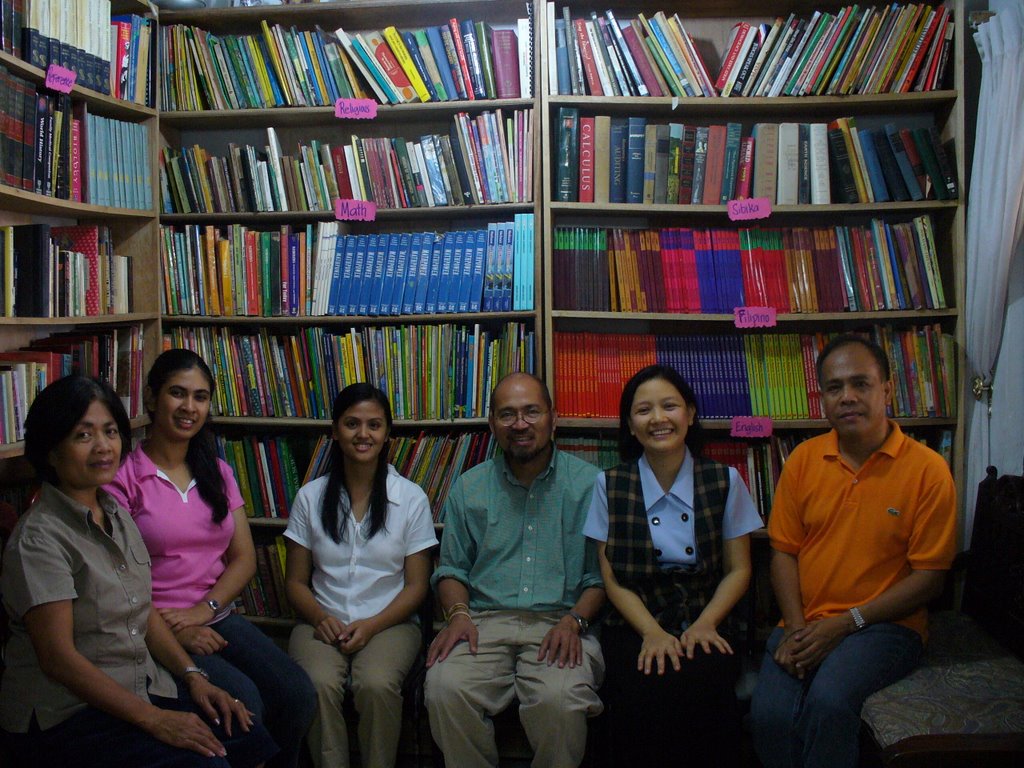
Volunteers from LCDF plus Fr. Ted (in green), me, and Marcy.


Volunteers with Marifel C (in blue).


Before 1pm, the kids took a snack-to-go (prepared by the volunteer parents) and walked back to school.

* * *

The kids need clipboards for their writing activities. We need about forty. Twenty kids come in for the daily sessions, but as many as forty come on Saturdays. Would you like to source the clipboards for BASA or volunteer in another capacity?

If you would like to replicate this project in your area, drop us a line at friendsofbasa@gmail.com or get in touch with Marifel Castriciones at 0915-445-53-97.
Share/Bookmark

Sunday, July 30, 2006

BASA's new library: Karangalan (Cainta, Rizal)


"Volunteers come and go, but God's work continues."


– Fr. Ted Gonzales, SJ

I've been away from BASA myself, so being back for a short vacation, it's great to know about how others, particularly Marifel Castriciones, have carried BASA's torch.

When I first met Marifel, I thought she was observing BASA's reading workshop in Maximo Estrella Elementary school in May 2005 to find out if she wanted to be part of our organization. That's her in the pink shirt (in the top photo, which was taken last year at Maximo Estrella) . I met her again through the first ever Agimat retreat for young leaders (with Fr. Ted as retreat master and several other young people including yours truly as part of the Agimat core) hosted in Rizal in June 2005.

I didn’t know that Marifel and I were actually working on BASA at the same time in different capacities. Marifel's done a lot of leg-work for BASA, researching different reading techniques, attending seminars, and gathering groups of children in Payatas to read to them, speaking with teachers and principals of schools, and even organizing trainor's training aimed at Cultivating a Culture of Reading.

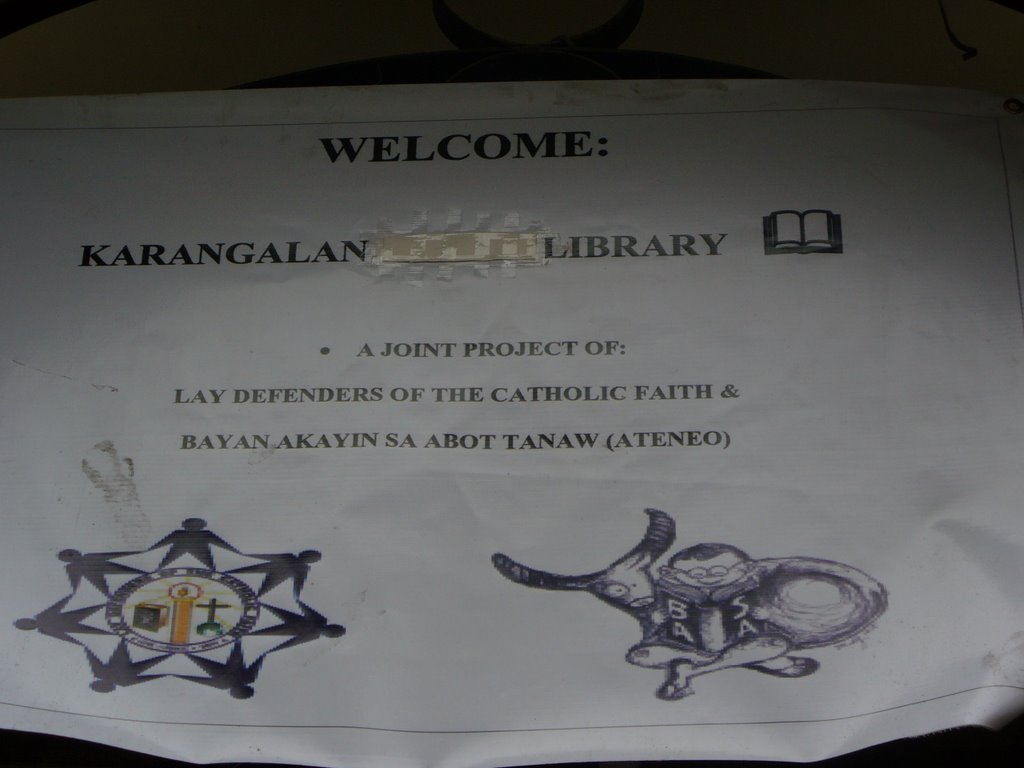
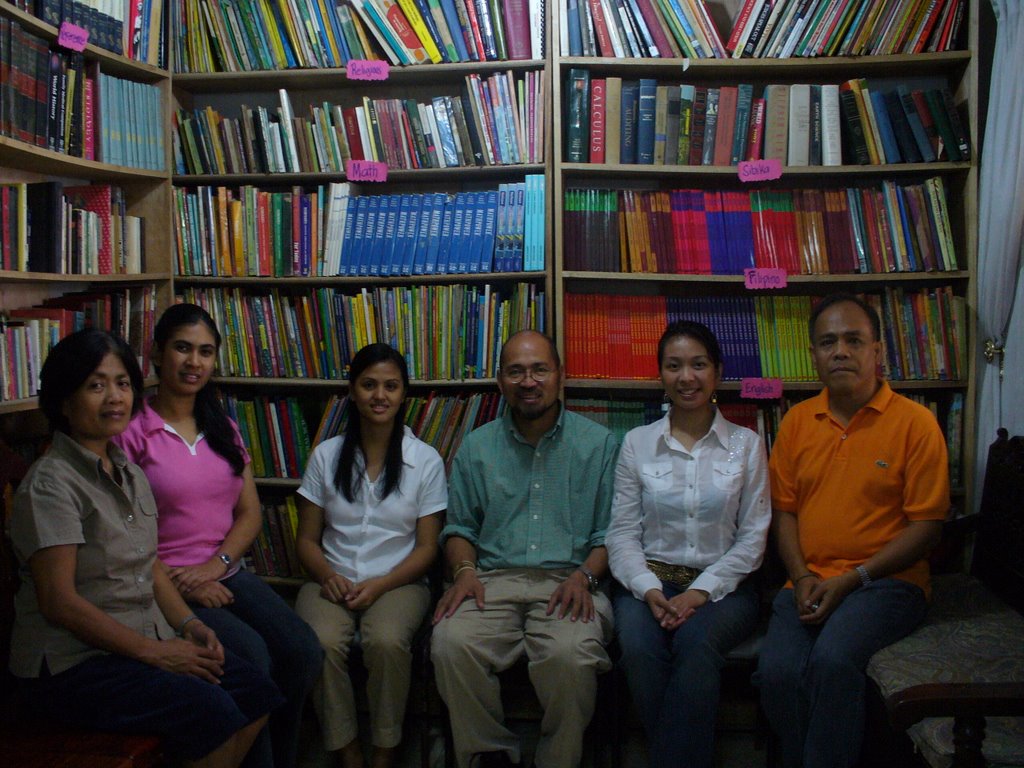
Later on, BASA, in coordination with the Lay Defenders of the Catholic Faith (LDCF), Cainta Chapter, a parish-based organization to which Marifel and her husband John are affiliated, opened Karangalan Library. Karangalan Library is the 40-45 square-foot first floor of a private home in Karangalan Village, Cainta, Rizal. A couple, Mr. and Mrs. Buenaventura lent the downstairs part of their abode to BASA so that children from the nearby public school (Karangalan Elementary) had a venue for reading and writing during their break time. Community help soon poured in – a carpenter built three big bookshelves for library use. Books donated to BASA were sorted by volunteers.

After having attended numerous reading workshops (Bagong Kulturang Pinoy, Aklatang Pabata, Alitaptap, and Marungko by Learning Links), BASA gave its own reading workshop to the non-working moms of the Row 4 kids.

In March 2006, the library opened its doors to students grades one to five, mostly Row 4 kids of Karangalan Elementary School. Row 4 is a moniker given to students who sit in the back row of the classroom and usually do not do well in school. Intervention was clearly needed. Every school day, from about 11:30am to 1pm, volunteers read value-laden stories to the children and supervised their writing activities. Each completed activity was equivalent to points which could be exchanged for school supplies and other prizes. Some scholars were also provided packed snacks they could bring back to school with them. Aside from reading and writing, the children were taught to say grace before meals, to sing Christian songs and to relate with one another.


The parents (who are mostly illiterate themselves) would often help the volunteers prepare the physical environment and some would even participate in the writing projects! Whether it is the point system that motivates them or that they are grabbing the opportunity to learn something, the parents' presence is a great help to everyone involved (volunteers and students alike). In the future, BASA volunteer Rhea wishes to see parents in more active roles in terms of environmental issues.

First things first though. BASA has already had to overextend its ministry to ensure the success
of the program – it needed to cater to the children’s basic needs. A lot of the children would often come hungry, shabbily dressed (or sometimes not dressed at all!), unmotivated and easily discouraged. Some came in, never knowing a single letter of the alphabet or numerals. At one point, when Marifel fed the children chicken afritada for lunch, some of the children would throw up, and explain that they weren’t used to a full meal; they were only accustomed to rice with soy sauce as topping. One child’s family would also often go to bed without supper!


Below: Children meet here to exchange their chits for prizes.

The volunteers responded by lending the children clothing, and more. Some of the parents of the children were even assisted to find other means of livelihood. After each reading session, each child receives a pack of biscuits s/he could take back to school. On Saturdays, youth volunteers would help provide the children alternates of arroz caldo, boiled mongo beans with milk, noodles with eggs, champorado or 3 slices of bread for each child’s breakfast, follow up on their assignments; give them more reading and writing exercises, and teach them basic hygienic practices. The encounter would culminate in the exchange of chits (from the point system) for school uniforms/supplies, slippers, shoes and clothes and some toys donated by the members of the community.

"Ginagawa namin ito dahil mahal kayo ng Diyos."

"We do this because God loves you."

- Marifel C to the Row 4 kids, explaining the BASA project

Children are frequently reminded that God loves them and it is because of this love that volunteers come regularly doing what they do in order to give the children a fighting chance in school.

Already, some kids, like Ricky, Mico and Marjorie are dropping out of the program because of their newfound independence in alphabet writing and reading skills, having undergone the program during their vacation in March 2006. Their farewell letters to their volunteer teachers were a testament to the skills they learned. Still, there are others from the original group who do not make it to the library at the appointed time, lured by tex and other games, while others can't make it because they are assigned to be "classroom cleaners of the day" by their teachers at public school. However, the library has recently attracted other visitors: some children who come only to listen to the storytelling session but would not join in the reading and writing exercises given to the Row 4 students, and also students from higher grades who are non-Row 4 students dropping by after classes to do research.

I'm looking forward to being part of this project before I leave again for school in August. This time around, our roles are reversed. Marifel is at the helm and I'm taking a backseat, but I don't mind the view!

Would you like to help out in the project?

Would you like to start a project like this for your adopted community?

Please call Marifel at 0915-445-53-97 or send an email to friendsofbasa@gmail.com

BASA wishes to thank Lay Defenders of the Catholic Faith, volunteers, and recent donors Eileen Legaspi-Ramirez of UP, friends of Yong and Vickie Bunye, Hawaii, USA, Scalabrini Congregation, and the Ateneo High School Book Club. Thank you very much and God bless you! Very special thanks to Marifel.

Donations to Karangalan library (writing pad paper, scratch paper, pencils, sharpeners, erasers, books, door prizes like sports equipment for the point system) may be sent to :

BASA c/o Fr. Ted Gonzales, SJ
Center for Family Ministries

8 Seminary Drive

Ateneo de Manila University

Loyola Heights, Quezon City 1108


Share/Bookmark

Reading in the most unlikely of places

Illustration by Jason Dy, SJ

Fr. Ted Gonzales, SJ believes in reading inspiring Filipino stories to children. After his masses, he would ask everyone in attendance to hold hands and ask them to repeat his favorite mantras. A particular one comes to mind:

Bayan ko, aalagaan kita.

Afterwards, he would encourage everyone to read to a child an inspiring Filipino story. Such stories, he believes, are seeds in nation-building.

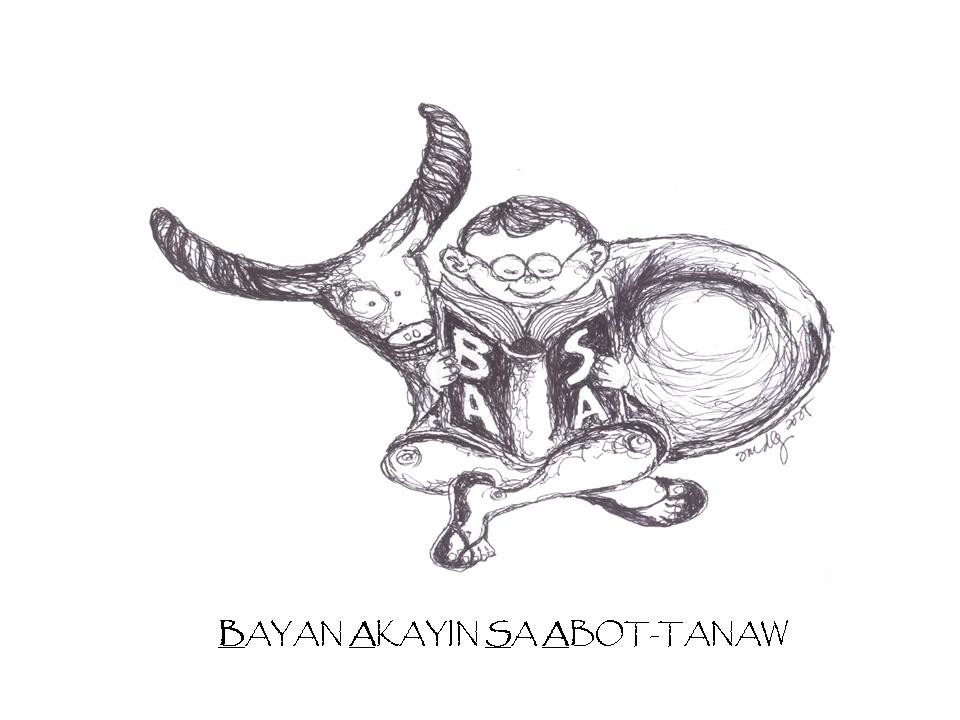
The logo above reminds Fr. Ted of the story of Mang Rustico. The son of a farmer and a housewife in southern Luzon, he kept up his studies in high school by multi-tasking - on top of a carabao, he would shepherd other carabaos (to help his dad) and read his schoolbooks at the same time.
"Sinasamantala ko na habang ako ay nagpapastol ng kalabaw, ang oras ay nagagamit ko para sa pag-aaral...sa pagbabasa ng mga assignment sa eskwela."

- Mang Rustico


Studious Rustico was observant as well. His children would tell Fr. Ted about his interesting observations on the farm – such as ants marching back to their hideaway, morsels of food in tow. How industrious and frugal they seemed – always saving these treasures for the rainy day that was sure to come – a lesson Mang Rustico carried with him as he grew up. His determination to succeed in school landed him a degree in Chemical Engineering from Mapua Institute of Technology, and eventually a high post in a multinational company, where he was instrumental in subcontracting a very popular beverage (I used a lot of this in college! - Frannie). Though already financially stable, he never forgot the lesson by the ants – doing some moonlighting in trading and merchandizing after his day job and on weekends, so he could earn extra income.

Panginoon, anumang handog mo sa amin, tulungan Ninyo po kaming ito ay pagyamanin at palaguin sa ikalulugod mo.


- Mang Rustico

Stories like these will be read to the children who visit Karangalan Library in Karangalan Village, Cainta, Rizal. Come and volunteer to read to them!

Please drop us a line at friendsofbasa@gmail.com

Special thanks to Fr. Ted, Sam R, and Mang Rustico for letting me do this piece.


Share/Bookmark

Creating a Culture of Reading Seminar


Summer 2006. 25 teachers attend BASA's Creating a Culture of Reading Seminar at Mercedarian Missionaries of Berriz School, in Novaliches, Quezon City.

Some pictures are from a past reading activity - Does anyone have information on how to separate the two parts to make 2 videos? Anyway, come check it out! Thank you to Eboie, Marifel’s sister, for putting the still pictures and the video together in a disc!

For more pictures, click here.
Share/Bookmark

Monday, May 30, 2005

BASA goes to Maximo Estrella!


Share/Bookmark

Friday, May 20, 2005

An Amulet of Greatness in Filipino Blood by Agnes Prieto

Phil Daily Inquirer

Harry Potter has his sorcerer’s stone. Father Ted has his agimat - amulets that transform situations, vanquish evil and bring on the good. But Harry Potter is a storybook character and Fr. Teodulo ‘Ted’ Gonzales is a Jesuit as real as the Ateneo campus. There’s something very intense about Gonzales the Jesuit, but he’s no brooding artist. Priest and pastoral counselor, he’s the Program Director at the Ateneo’s Center for Family Ministries (Cefam) - a caregiver for the soul. In these congruent roles, he counsels, teaches and facilitates group discussions for personal growth as well as family and community wellness.

Fr. Ted recalls getting attracted to the priesthood early in his childhood, when he used to attend dawn masses with his parents in a small chapel called Apu in Pampanga. His father was a cursillista while his mother had a devotion to Our Lady of Perpetual Help. Compassion and conservation Growing up with eight other siblings, the young Ted helped out his mother, who sold fruits and vegetables in the market, by hawking ice candy, sweet tamarind and ginger. The early deprivations would teach him compassion and the conservation of resources. “Our parents sent us to good schools and for this I am grateful,” he says. From the provincial high school, he entered the Jesuit-run San Jose Seminary in 1974. He later pursued his master’s at the Ateneo’s Loyola School of Theology and his doctorate in Pastoral Counseling at the Loyola School in Maryland. “The path to priesthood was not easy,” says Fr. Ted. “I had to learn to face the demands of learning and the path of integrity. I had to learn to face doubts and strong emotions of love. I am a very intense and passionate person. My love had to be purified to fit the kind of life I am asked to live. To love with discipline and compassion is a great challenge.” An avid reader, Fr. Ted grabbed anything in print he could get hold of “from books on interior design to stories on well known personages in finance, business, management and history, to citations in various awards, to 100 Filipino Women, Famous Chinoys, Adarna books for children, and Inquirer articles.” All these led him to conclude, “Contrary to the notion that we are a damaged culture, we are a culture in search of its soul, identity and spirituality. We have experienced much abuse, which continues on in politics and government, but instead of learning from our past, we repeat its dysfunction. The victims might become the tyrants of tomorrow.” What we need, says Fr. Ted, is an agimat, a talisman, an amulet to lead us out of that cycle. Talk of amulets provokes images of babaylans and shamans of yore, well-respected figures banished by the friars when they Christianized the islands. There’s talk among Filipino occultists that the friars also took away a black book that contained the old rituals and spells of these revered priests and priestesses. That book is rumored to be in the possession of the Jesuits. What Fr. Ted is espousing is somewhat more prosaic however. Best examples The agimat he refers to is “the value systems which carry our strength as a people and a country. Instead of focusing on weaknesses and divisiveness, why not focus on the best examples of Filipino strength and solidarity—the Apos or elders?” he suggests. “We call on Apos from different fields to share their success stories with our young leaders. In this way, they transmit the power or the agimat to the next generation, inspiring them and affirming their good values,” adds Fr. Ted. The sharing can be done in a weekend workshop called “Agimat ni Apo,” which brings together a multi-sectoral audience and feeds the Apo concept into the mainstream. This workshop “takes its participants back to when we knew we were a people of great value, a time when we were proud to be Filipino. The agimat is the Filipino symbol for power. It is an archetype, a search for pride and esteem through our local culture.” He continues: “The climax of our legends is when the hero wields his agimat and vanquishes the enemy, and though we hardly hear those stories anymore, we have new heroes, we have new myths and legends. We only have to listen to stories of how Jose Rizal, Apolinario Mabini, Jovito Salonga, Ninoy Aquino, Miguel Malvar, Chino Roces, Cecilia Muñoz Palma, Haydee Yorac, Randolf David and so many nameless others overcame obstacles and lived their values. These stories are the magical tools we all have access to so that we may transform our lives.” Simplicity and servanthood The workshop consists of five parts—the first focuses on confidence in times of crisis and draws out the major challenges and stresses undergone. In storytelling, these would be symbolized by the kapre, the tikbalang and the multo—emphasis is given on what builds confidence. The second part is reflection and honest assessment—“how we have lost our sense of giftedness,” a look at our strengths and weaknesses. Responsibility, stewardship, simplicity and servanthood are the values focused on in the third part. “We have to stop passing blame. People live in shame,” notes Fr. Ted. Idea, inspiration and imagination make up the fourth module—“Action without vision is purposeless, we have to be able to integrate all that is happening in our lives and align our imagination to the big why. Integrating all these is the fifth module which focuses on solidarity or bayanihan. Our dreams will come true because we work with others to realize a common vision.” Sr. Soria Aireen Tabada, Provincial Superior of the Holy Family Sisters and a recent workshop participant, says, “In the weekend get together, the participants are drawn towards an appreciation of our own gems, and the gems of others make us realize that the God who created us is indeed good and is shown in each of us. The problem starts when we are not able to get hold of our gems as a people.” Choncho Sanchez, another participant and former philosophy professor at St. Scholastica’s College, agrees: “What Agimat ni Apo points to is not an amulet of magic or an anting-anting of a particular obscure cult, but a living opportunity to be better and not bitter. One is given the clear choice to take the higher road to self-acceptance, confident that one is not alone in the lonely moments of life. “Here is where faith, hope and love intermingle in one’s heart. The result is that a certain defining moment of inner peace is reached by one whose life has been marred by chaos and confusion. A certain calmness hovers and covers one’s heart. At this juncture, self-discovery starts. Crisis becomes catharsis!” “We have overlooked the fact that greatness runs through our veins,” adds Fr. Ted. “My favorite song is ‘Noypi’ (by Bamboo), particularly the lines that go, ‘may agimat ang dugo ko (there’s an amulet in my blood).’ We have forgotten this. We have been sidetracked by our own gloomy point of view of ourselves, perhaps inherited from the colonizers. We also have to see where we excel, where we do things well. Our mentors lead the way, reminding us of our agimat to greatness.” A culture of heroes He continues, “I wish to support the idea of building a culture of heroes, through the search for common patterns or best practices of the people we admire. Fr. Horacio de la Costa, another Jesuit, said that Filipinos have two jewels: Faith and Music. I guess faith and music drive our spirit to dream and to imagine what we can become.” There is a need for a strong body of literature to support this, Fr. Ted admits. It is important to build a base of affirmative and inspiring stories that can somehow be disseminated to a mass audience, he says, suggesting the mobilization and encouragement of a love of reading in young Filipinos. “Basa” is a library outreach project, a first baby step to integrate collected stories of heroes in a book called simply, “Agimat.” (The final version of the book is Agimat ni Apo - Frannie) Fr. Ted is optimistic. “Through these and other stories, we hope to begin to sow seeds into a new stream of consciousness.” The base for all these changes, he adds, is the family through such programs that Cefam has started: “San Jose,” with its focus on Filipino maleness, “Life’s Directions” for young adults on the brink of professional and personal maturity,” and “On Fire,” a workshop on sexuality. “It is families that will eventually shape culture,” says Fr. Ted. Discipline, both personal and group, is as important as the shift of consciousness through stories and imagination, which is a prime factor in building a nation.” “Hindi malas ang Pinoy, hindi pa lang siya nagkakamalay (Filipino aren’t cursed; they just lack consciousness as yet),” he concludes. (To inquire about Agimat workshop schedules, call Cefam at 02-426-4289 and look for Fr. Ted Gonzales.)
Share/Bookmark

Saturday, April 30, 2005

BASA goes to La Union


Share/Bookmark

LinkWithin

Related Posts with Thumbnails